Taipei Medical University

Clinical Pharmacokinetics: Dosing and Monitoring

Taipei Medical University

Clinical Pharmacokinetics: Dosing and Monitoring

Included with Coursera Plus

Gain insight into a topic and learn the fundamentals.
Intermediate level

Recommended experience

2 weeks to complete
at 10 hours a week
Flexible schedule
Learn at your own pace
Gain insight into a topic and learn the fundamentals.
Intermediate level

Recommended experience

2 weeks to complete
at 10 hours a week
Flexible schedule
Learn at your own pace

What you'll learn

  • Apply pharmacokinetic principles to individualize and monitor drug dosing through problem-solving exercises used in pharmacy practice.

Details to know

Shareable certificate

Add to your LinkedIn profile

Recently updated!

May 2026

Assessments

14 assignments¹

AI Graded see disclaimer
Taught in English

See how employees at top companies are mastering in-demand skills

 logos of Petrobras, TATA, Danone, Capgemini, P&G and L'Oreal

There are 7 modules in this course

This module introduces the fundamental concepts of pharmacokinetics through the intuitive "Fish Tank" model. Dr. Daniel Brown will explain the core principles of first-order elimination, guiding learners to define the volume of distribution, clearance, and the elimination rate constant. The curriculum explores the physiological context of these metrics, illustrating why changes in protein binding actively affect both drug clearance and volume. By the end of this module, learners will understand the specific factors that determine the area under the curve (AUC) and be able to describe how half-life and the percentage of remaining drug are calculated during the elimination phase.

What's included

6 videos2 readings2 assignments

Building upon foundational pharmacokinetic principles, this module examines the dynamic clinical application of drug dosing. Dr. Daniel Brown comprehensively compares the effects of administering a loading dose, a continuous infusion, and an intermittent dosing regimen to achieve specific target steady-state concentrations (such as C0, Css, Cav,ss, Cmax,ss, and Cmin,ss). Furthermore, the module elucidates how the superposition principle and first-order linearity can be practically applied to design patient-specific regimens. Learners will also evaluate the percentage of drug lost and correlate this factor with drug accumulation dynamics during various infusion and intermittent therapies.

What's included

5 videos2 readings2 assignments

This module focuses on the analytical evaluation and prediction of fluctuations in serum drug concentrations. Dr. Daniel Brown will detail the critical physiological and pharmacological factors that dictate the determination of an optimal dosing interval (tau) and overall dose. Learners will systematically predict the clinical impact that modifications in dose, volume of distribution, tau, or the elimination rate constant have on both serum concentrations and AUC. Additionally, the module provides practical strategies to accurately determine how a patient's serum drug concentration would be pharmacokinetically altered by missed or supplemental doses.

What's included

6 videos1 reading3 assignments

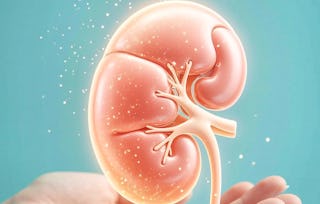
Drug elimination pathways are complex and essential for designing safe therapeutic regimens. In this module, Dr. Daniel Brown explores the physiological differences between drug elimination via renal filtration and hepatic biotransformation. Learners will evaluate how to estimate renal function using creatinine clearance (CLCr) or GFR, adjust these metrics to a standard body size, and critically assess the inherent sources of error in the Cockcroft-Gault equation related to body composition. The module also provides an in-depth analysis of hepatic clearance mechanics, distinguishing between High E and Low E drugs, and explaining how factors such as QH, CLint, and fu impact the hepatic first-pass effect, Css, CU, and overall bioavailability.

What's included

8 videos1 reading2 assignments

Transitioning from theoretical models to specific pharmacotherapy, this module addresses the clinical dosing of narrow-therapeutic-index antibiotics. Dr. Daniel Brown elucidates the fundamental differences between time-dependent and concentration-dependent antibiotic killing, specifically distinguishing between AUC24 and AUIC metrics. Learners will master the estimation of vancomycin clearance to design individualized dosing regimens—including loading doses, intermittent regimens, or continuous infusions—based on CLCr, patient weight, and infection severity. Finally, the module explores extended-interval dosing for aminoglycosides, demonstrating how to utilize the Hartford nomogram to estimate pharmacokinetic parameters such as k and half-life effectively.

What's included

6 videos1 reading2 assignments1 discussion prompt

In this final application-based module, learners will synthesize their pharmacokinetic knowledge through realistic clinical case studies involving vancomycin and gentamicin. Dr. Daniel Brown facilitates the practical calculation of estimated serum levels and instructs learners on determining the optimal timing for drawing therapeutic drug monitoring samples. The curriculum covers how to appropriately evaluate inappropriately drawn levels, recommend evidence-based dose adjustments, and identify comprehensive monitoring parameters for both clinical efficacy and safety. The module concludes with a critical evaluation of the limitations associated with relying solely on trough levels, grounded in current clinical literature and guideline recommendations.

What's included

3 videos2 readings2 assignments

This assessment evaluates cumulative understanding of clinical pharmacokinetics across all six modules of the course and is designed to assess the ability to integrate and apply key pharmacokinetic concepts in clinically relevant situations. It requires learners to demonstrate overall mastery of core principles and their application to patient care, including the interpretation of drug concentration data and the use of pharmacokinetic reasoning to support safe and effective dosing decisions.

What's included

1 assignment1 discussion prompt

Instructor

Hsiang-Yin Shawn Chen
Taipei Medical University
1 Course12 learners

Offered by

Explore more from Patient Care
Why people choose Coursera for their career

Felipe M.

Learner since 2018
"To be able to take courses at my own pace and rhythm has been an amazing experience. I can learn whenever it fits my schedule and mood."

Jennifer J.

Learner since 2020
"I directly applied the concepts and skills I learned from my courses to an exciting new project at work."

Larry W.

Learner since 2021
"When I need courses on topics that my university doesn't offer, Coursera is one of the best places to go."

Chaitanya A.

"Learning isn't just about being better at your job: it's so much more than that. Coursera allows me to learn without limits."

Frequently asked questions

¹ Some assignments in this course are AI-graded. For these assignments, your data will be used in accordance with Coursera's Privacy Notice.