Veterinary Courses
Veterinary courses can help you learn animal anatomy, physiology, diagnostics, and treatment protocols. You can build skills in surgical techniques, anesthesia management, and client communication. Many courses introduce tools like diagnostic imaging equipment, laboratory analysis software, and electronic health records, that support effective veterinary practice and patient care.
Popular Veterinary Courses and Certifications
 Status: Preview
The George Washington University
Skills you'll gain: Drug Development, Law, Regulation, and Compliance, Health Equity, Informed Consent, Pharmaceuticals, Health Care Procedure and Regulation, Healthcare Ethics, Public Health and Disease Prevention, Health Disparities, Regulatory Compliance, Public Health, Health Policy, Personal Injury Law, Advocacy, Policy Analysis, Intellectual Property, Infectious Diseases, Patient Education And Counseling, Public Affairs, Emergency Response
 Status: Preview
University of Nebraska
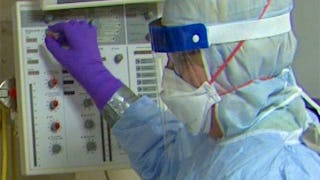
Skills you'll gain: Personal protective equipment, Bloodborne Pathogens, Infection Control, Equipment decontamination, Infectious Diseases, Stress First Aid, Public Health and Disease Prevention, Patient Safety, Patient Evaluation, Patient Flow, Epidemiology, Public Health, Mental Health, Media and Communications, Behavioral Health
 Status: Preview
Pontificia Universidad Católica de Chile
Skills you'll gain: Health Systems, Health Education, Public Health, Public Health and Disease Prevention, Preventative Care, Infectious Diseases, Health Policy, Health Promotion, Environmental Science, Community Health, Epidemiology, Food Safety and Sanitation, Environment, Food Quality Assurance And Control, Sustainable Development, Medical Science and Research, Biology, Research and Design, Environmental Issue, Microbiology
 Status: Free Trial
Duke University
Skills you'll gain: Telehealth, Patient Evaluation, Health Technology, Patient Positioning, Health Assessment, Clinical Assessment, Patient Treatment, Patient Preparation, Patient Communication, Health Informatics, Telecommunications
 Status: NewStatus: Free Trial
Skills you'll gain: Patient Education And Counseling, Patient Coordination, Law, Regulation, and Compliance, Educational Materials, Needs Assessment, Decision Making
 Status: NewStatus: Free Trial
Universidades Anáhuac
Skills you'll gain: Oral and Dental Care, Dental Procedures
In summary, here are 6 of our most popular veterinary courses
- Vaccine Law and Policy: The George Washington University
- High Level Biocontainment for Healthcare Facilities: University of Nebraska
- Una Salud: la salud humana, animal y de los ecosistemas: Pontificia Universidad Católica de Chile
- Telehealth: Head and Neck Assessment: Duke University
- Guide Patients: Clinic Communication & Support: Coursera
- Topics of Medical Spanish III: Dentistry and Oral Health: Universidades Anáhuac










